Local Branding: How to Build Your Company's Recognition in a Small Town
• Tuesday, 11th November 2025 • Strategia •
Why Local Recognition = Steady Work
In a small town in Kashubia, in Borki Wielkie or Lębork, the rules are different from Warsaw. You don't compete with international chains through billboard advertising. You win when the baker immediately gives out your phone number as soon as someone asks about the best carpenter in the area. When people in the local Facebook group write: "I only recommend company XYZ, the rest is rubbish".
This is local recognition – the state in which your company is the first thing residents think of when they need a particular service. It isn't a matter of luck. It is the result of consistent work on branding, which in a small town operates on completely different principles than in a big city.
The data is brutal: 87% of customers of local businesses decide to buy based on a recommendation from a neighbour or friend (BrightLocal study, 2024). In a small town where everyone knows each other, that figure is even higher. If you don't build a deliberate branding strategy, you lose 3 out of 4 potential customers before they even find out you exist.
The Psychology of Local Branding: Why Small Towns Are Different
1. Word of Mouth = Local Currency
In Gdańsk you can have 200 competitors and nobody will notice you changed your logo. In Kartuzy every action you take, every job, every dissatisfied customer is information that travels around 5,000 residents within a week. It's a double-edged sword.
The small-town advantage: One satisfied customer = 10-15 recommendations within a year. One dissatisfied customer = 30-50 potential jobs lost. The maths is simple: quality must be perfect, and branding exists to make that quality visible and memorable.
2. Trust > Price
In a small town you won't win on price. A customer will always find someone cheaper (often in the grey economy). You win on trust – the belief that you won't leave them in the lurch, that the company is "from the same village", that if something goes wrong you won't vanish without a trace.
Building trust is a long process, but in a small community it compounds exponentially. Once you're "one of us", you become the automatic choice for 60-70% of the market. The remaining 30-40% will always look for the cheapest option – but they aren't your customer.
3. Community > Transaction
In a big city a company is a transaction: you did the job, they paid, end of story. In a small town a company is a member of the community. People want to know: do you sponsor the football team? Did you have a stand at the municipal fair? Are your employees local people?
Companies that understand this build loyalty that goes far beyond price competition. For example, a carpenter from Chojnice who sponsored the local youth team's kit for 3 years took 80% of the made-to-measure furniture jobs across the whole municipality. Because "he's one of ours".
5 Offline Channels: Where a Small Business Beats the Chains
Channel 1: Local Events – Be Where Your Customers Are
Municipal fairs, markets, harvest festivals, town days – these are the places where 70-80% of the community meets in a small town. This isn't about an exhibition stand costing PLN 5,000. It's about presence.
How to do it:
- Small-scale sponsorship: PLN 500-1,000 for competition prizes, bouncy castles for children, refreshments. Your logo is seen by 2,000 people over the course of the day.
- Live demonstrations: If you're a carpenter, show how you work wood. A plumber? Run a mini-workshop on "How to unblock a clogged sink". People remember that.
- Useful giveaways: Not pens with a logo (they get thrown away). Eco bags, lighters, a fridge magnet with your phone number. Something that stays in the home for years.
Result: A renovation company from Puck that exhibited at local fairs for 2 years (cost around PLN 3,000 a year) saw recognition among residents rise from 12% to 67% (own survey, 300 questionnaires).
Channel 2: Cooperation with Other Local Businesses
This is the best-kept secret of local branding. Instead of competing, cooperate.
Examples of real synergies:
- Gardening company + building supplies shop: Joint workshops on "How to create a garden from scratch". The shop gets footfall, the gardener gets customers, residents get knowledge.
- Wedding photographer + florist + wedding planner: A "turnkey wedding" service package. Three companies share the advertising costs and each gets customers.
- Mechanic + car wash + tyre fitter: A loyalty card honoured at all three places. A network effect without building your own network.
How to get started: Identify 5 businesses that have the same customers as you but don't compete directly. Propose a joint event, a cross-discount or a leaflet swap. Cost: PLN 0. Result: access to your partner's customer base.
Channel 3: Local Sponsorship – An Investment That Pays Back
You don't have to be the main sponsor of a top-flight team. It is enough for your logo to be on the shirts of a children's football team that parents (= your potential customers) watch all season.
What to sponsor:
- Youth sport: PLN 2,000-5,000 a year = logo on kit + a mention in the club's media + visibility at matches (parents = purchasing decision-makers).
- School fairs: PLN 500-1,000 for prizes = public thanks + a mention in the school newsletter (reach: 300-500 families).
- Volunteer fire brigades (OSP): Supporting fire stations = lasting gratitude from the community + a strong association with local involvement.
Sponsorship ROI: A haulage company from Kościerzyna (10 vehicles) sponsors a junior team (PLN 1,500 a year). Within 12 months, 23 parents from the team used its services (average job value: PLN 800). Return: PLN 18,400 on an investment of PLN 1,500 = 1227% ROI.
Channel 4: The Physical Business Card – How Your Company Looks Says Everything
In a small town everyone walks past your office, workshop or shop. It's either your best advertisement or your biggest act of sabotage.
Elements of a physical business card:
- Signage: Legible from 50 metres, consistent with your logo. Lit in the evening. It costs PLN 1,500-3,000 as a one-off, but works 24/7 for years.
- Condition of the building: Freshly painted, tidy grounds, well-kept greenery. Sounds trivial? 60% of small companies have a neglected surrounding area – it's easy to stand out.
- Company fleet: Vehicles with your logo, phone number and website. In a small town a single vehicle gets 50-100 views a day. Wrapping: PLN 800-1,500. Annual reach: ~30,000 people.
- Staff clothing: Matching T-shirts/hoodies with your logo. It's not overkill – it's professionalism. Cost: PLN 50-80 per person. Result: instant recognition.
Case: A cleaning company from Żukowo invested PLN 4,000 in wrapping 2 vehicles plus matching uniforms. Within 6 months the number of quote requests rose by 140% with no other form of advertising.
Channel 5: Local Press and Media
Local newspapers, municipal portals, regional radio – in a small town these are not relics. They are still the main sources of information for the over-50s (= the group with the greatest purchasing power).
How to get in:
- Expert articles: Propose an advice series to the editors (e.g. "The Plumber Advises" every month). Cost: PLN 0 (content in exchange for advertising). Result: expert status.
- Local newsjacking: Something is happening in the municipality (a new investment, a problem)? Offer an expert comment. Editors are looking for local voices.
- Banner advertising: PLN 200-500 a month on a local portal = visibility + supporting local media (good PR).
Online: Google Maps, Local Facebook and a Website with Local SEO
Google Maps – The Absolute Basics
In a small town 78% of searches for services begin with the phrase "[service] + [town]" (e.g. "plumber Kartuzy"). If you're not in the top 3 on Google Maps, you don't exist for 3 out of 4 customers.
Minimum optimisation (time: 2h):
- Google Business Profile 100% complete (name, address, phone, hours, categories)
- 15-20 photos of the company, completed jobs and the team (geotagged!)
- Weekly posts (promotions, completed jobs, news)
- At least 20 reviews (5 stars) with replies
- A "Questions and answers" section with the 10 most common questions
More details: See our article Local marketing 2025: how to win on Google Maps.
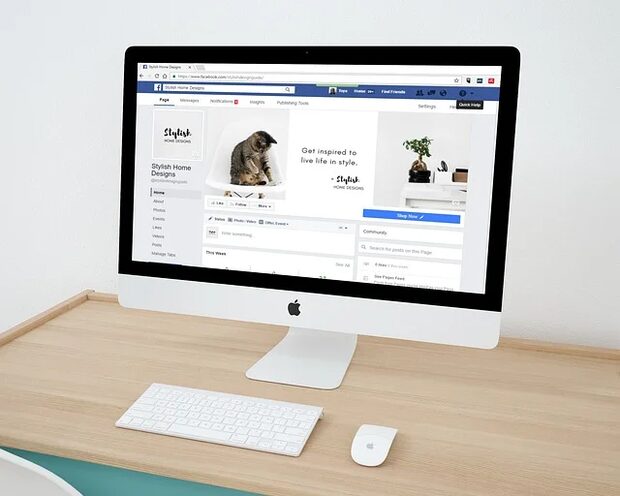
Local Facebook – Where Your Community Lives
In a small town 80-90% of residents are in a local Facebook group ("Kartuzy – classifieds", "What's up in Puck"). It's your main communication channel.
The 3x3 strategy:
- 3 times a week, publish value: A tip, behind the scenes of a job, a customer case study (with permission), a local curiosity related to your industry.
- 3 times a month, engage: A competition ("Guess what we're renovating – win a discount"), a poll ("Which do you prefer: tiles or panels?"), quizzes.
- Respond to 100% of comments within 2h: In a small town no reply = "they think they're better than us". A cardinal sin.
What NOT to do: Don't spam "SALE! CALL NOW!" announcements. In a local group that's the fastest route to a ban and a bad reputation. The rule: 80% value, 20% selling.
A Website with Local SEO
Your website must shout: "WE'RE FROM HERE". Google rewards this with higher positions in local searches.
Essential elements of local SEO:
- The town name in the Title of every page: "Carpenter Kartuzy – made-to-measure furniture" (not "Carpenter – made-to-measure furniture")
- A "Service area" section: List all the surrounding towns (Kartuzy, Żukowo, Szemud, Sierakowice, Sulęczyno). This gives you rankings in ~15 towns at once.
- A Google map on the contact page: Embedded, clickable, with a pin at your location.
- Local case studies: "Project: house in Sierakowice", "Project: garden in Szemud". Google indexes these.
- A blog with local phrases: "How to prepare your home for winter in Kashubia", "The best plants for a garden in Kartuzy". Long-tail keywords = free traffic.
NAP structure (Name, Address, Phone): Your details must be identical on your website, Google Maps, Facebook and in all directories. Even a single typo kills local SEO.
Case Study: A Kashubian Company That Dominated Its Local Market
Before: Invisibility and a Fight for Every Customer
Company: A carpentry workshop in Sierakowice (a municipality of 10,000 residents)
Starting position (2022):
- 3 employees: the owner and 2 carpenters
- Revenue: PLN 180,000 a year (PLN 15,000 a month)
- Source of customers: 90% referrals, 10% chance
- Recognition: 8% of residents knew the company (survey of 200 people)
- Competition: 5 other carpenters in the municipality, all fighting on price
- Problem: seasonality – a queue in summer, downtime in winter
Strategy: Consistent Local Branding over 18 Months
Phase 1 (months 1-3): Foundations
- New logo and visual identity (cost: PLN 2,500 – local agency)
- LED sign at the workshop (PLN 2,000)
- Wrapping the company van (PLN 1,200)
- Website with local SEO (PLN 3,500 – WordPress + optimisation)
- Google Business Profile – full optimisation (time: 4h, cost: PLN 0)
- Investment: PLN 9,200
Phase 2 (months 4-9): Building Presence
- Sponsoring the OSP youth team (PLN 1,500 a year)
- A stand at the municipal fair with a wood-carving demonstration (PLN 500)
- Cooperation with a local interior designer (exchange of customers, cost: PLN 0)
- Publications in the local newspaper: a monthly "The Carpenter Advises" series (in exchange for a mini-advert)
- Facebook: 3 posts a week showing completed work + 1 tip
- Collecting Google reviews: 35 five-star reviews in 6 months
- Investment: PLN 2,000
Phase 3 (months 10-18): Dominance
- Number 1 on Google Maps for "carpenter Sierakowice" and "made-to-measure furniture Kartuzy"
- Instagram profile – reels from furniture production (organic reach: 2,000-5,000 views per post)
- Workshops for residents, "How to restore old furniture" (twice a year, 15 people = 15 ambassadors)
- A "Furniture + installation" package in cooperation with a renovation company (cross-selling)
- Investment: PLN 1,000
After: Market Leader with a 4-Month Waiting List
Position after 18 months (2024):
- Staff: 6 employees (+ 3 people)
- Revenue: PLN 520,000 a year (PLN 43,000 a month = +189% growth)
- Source of customers: 40% Google Maps, 35% Facebook/referrals, 15% website, 10% partnerships
- Recognition: 61% of residents know the company (survey of 300 people = +662% growth)
- Average job value: up from PLN 3,500 to PLN 6,200 (+77% – customers perceive the company as premium)
- Waiting list: 3-4 months (previously: immediate turnaround = a signal of low demand)
Total investment in branding (18 months): PLN 12,200
Annual revenue growth: PLN 340,000
ROI: 2787%
Key takeaways from the case study:
- Consistency > budget: It wasn't a big campaign. It was systematic effort over 18 months.
- Being local = an advantage: The company didn't compete with Ikea or Agata Meble. It built a position as "our own carpenter from Sierakowice".
- Multichannel: No single channel would have delivered this result. It's the sum of offline + online.
- Community: Sponsorship, workshops, advice columns – everything built the perception of a "locally involved company".
- Quality first: Branding doesn't work without excellent service. 35 five-star reviews are the result of flawless work.
Action Plan: Where to Start (3-Month Checklist)
MONTH 1: Foundations (Budget: PLN 3,000-5,000)
Weeks 1-2: Visual identity
- [ ] Professional logo (a graphic designer or a platform such as Canva Pro) – PLN 500-2,000
- [ ] Company colours (2-3 colours) + typefaces (1-2 fonts)
- [ ] Templates: business cards, letterheads, email signature
- [ ] Guidelines: "How to use the logo" (1 A4 page for staff/partners)
Weeks 3-4: Physical business card
- [ ] Company signage at your location (if you don't have any) – PLN 1,500-3,000
- [ ] Wrapping at least 1 vehicle or door magnets – PLN 800-1,500
- [ ] T-shirts/hoodies with your logo for the team (minimum 3) – PLN 150-300
- [ ] Tidying the surroundings of the business (cleaning, a sign, greenery) – PLN 0-500
MONTH 2: Online Presence (Budget: PLN 0-2,000)
Week 1: Google Maps
- [ ] Google Business Profile: registration + verification
- [ ] Complete 100%: name, address, phone, website, hours, categories
- [ ] 15 photos: outside/inside the business, completed jobs, the team (geotagged)
- [ ] First post: company introduction + team photo
- [ ] Q&A section: the 5 most common questions + answers
Week 2: Facebook
- [ ] Company page: consistent with your visual identity
- [ ] Join 3-5 local Facebook groups
- [ ] Publishing plan: 3 posts a week (Monday, Wednesday, Friday)
- [ ] First week of posts: company introduction, behind the scenes, an industry tip
Weeks 3-4: Website (if you don't have one)
- [ ] A WordPress or Wix site – PLN 0-3,000 (you can do it yourself or commission it)
- [ ] Essential pages: home, about us, services, projects, contact
- [ ] Local SEO: town in the title, a "service area" section, Google map
- [ ] NAP (Name, Address, Phone) identical to Google Maps
- [ ] Contact form + a "Call" button (tappable on mobile)
MONTH 3: Building Community (Budget: PLN 500-2,000)
Weeks 1-2: First reviews
- [ ] A list of your 10 most recent satisfied customers
- [ ] SMS/email with a link to leave a Google review (template: "Thank you for your trust! If you're happy with our work, please leave a review: [link]. It will help us a great deal.")
- [ ] Goal: at least 10 five-star reviews in 2 weeks
- [ ] Reply to every review (even a 5-star one: "Thank you! We look forward to working with you again.")
Week 3: First event/partnership
- [ ] Identify 3 local businesses with a complementary offer (not competitors)
- [ ] Proposal: a leaflet swap, a cross-discount or a joint event
- [ ] Or: sponsoring a local event (fair, tournament, volunteer fire brigade) – PLN 500-2,000
Week 4: Local media
- [ ] A list of local newspapers, portals and radio stations
- [ ] Proposal: an expert series ("[Industry] Advises" once a month) – cost: PLN 0
- [ ] Or: a mini-interview about the company ("New business in the municipality" – local portals love these)
Success Metrics after 3 Months
Check whether you can see these results:
- [ ] 20+ Google reviews with an average of at least 4.8*
- [ ] Top 5 on Google Maps for the phrase "[service] [town]"
- [ ] 200+ likes on Facebook + 5-10 comments under posts
- [ ] 2-3 quote requests a week from Google/Facebook (previously: 0-1)
- [ ] Local recognition: at least 2 people a week say "I saw your vehicle/sign"
- [ ] First spontaneous referrals: customers say "I found you through a friend"
If you see 4 of the 6 results above, you're on the right track. It isn't market dominance yet, but it's a solid foundation for the next 12 months of growth.
Summary: Consistency Is the Strategy
In a small town you won't win with a single advertising campaign. You won't win with the biggest budget. You'll win with consistency – showing up in the right places, building relationships, delivering value and staying visible for 12-18 months.
The carpenter from Sierakowice invested PLN 12,200 over 18 months and increased revenue by PLN 340,000. That isn't magic. It's a strategy that works for any local business: from a plumber, through a hairdresser, to a renovation company.
3 things to remember:
- Small town = advantage – Word of mouth compounds exponentially. Use it.
- Branding isn't a logo – It's the sum of experiences: from the look of your vehicle, through a Google review, to the words of thanks at a sponsored fair.
- Time is on your side – Your competitors will give up after 2 months. You will be visible for 2 years. Guess who wins?
Get in touch – Digital Effect specialises in building recognition for small businesses in Pomerania. We don't sell huge campaigns – we build strategies that really work in small towns.