A Chatbot on a Small Business Website - Is It Worth It in 2026?
• Sunday, 26th July 2026 • Strony i UX •
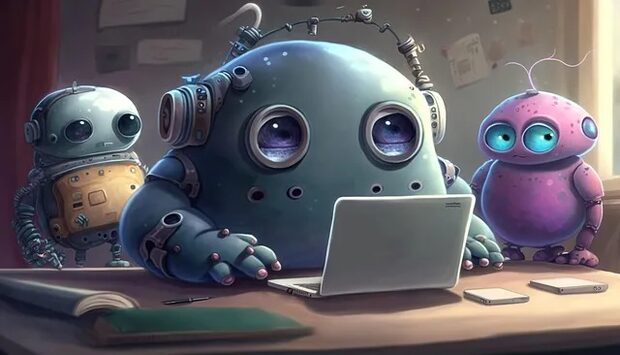
A chatbot on your website - fad or real benefit
Chatbots now appear on the websites of almost every larger company, and the little window asking whether you need any help has become so common that we no longer notice it. It's no surprise that small business owners are starting to wonder whether they should have one too. The promise is tempting: round-the-clock customer service, instant answers and less work on the phone and email. Reality is often more complicated, though, and a badly implemented chatbot can do more harm than good.
In this article we look at the subject with a cool head. We explain the different types of chatbot, when they genuinely help a small business and when they merely annoy visitors, how much implementation costs and how to design a chatbot so that it supports, rather than spoils, the experience of using your website. That way you can make the decision consciously, rather than under the influence of fashion alone.
Types of chatbot - not every one is artificial intelligence
Before you assess whether a chatbot would be useful to you, it's worth distinguishing the two main types, because they differ in cost, capabilities and the way they work.
- Rule-based chatbot - works from a predefined scenario, buttons and ready-made questions. It is cheap, predictable and works very well for simple, repetitive matters, such as opening hours or redirecting to a form.
- AI-based chatbot - understands questions asked in natural language and can answer freely based on knowledge about the company. It is more flexible, but needs better preparation and monitoring so that it doesn't give wrong answers.
For most small businesses, the starting point is a rule-based chatbot or a simple hybrid model. Advanced artificial intelligence makes sense where there are many varied questions and the company is able to take care of the quality of the answers. The choice of tool should follow from real needs, not from a wish to own the latest technology.
When a chatbot genuinely helps
A chatbot makes sense when it solves a specific problem, rather than being an add-on for effect. There are several situations in which it can genuinely relieve a small business and improve customer service.

The first case is repetitive questions. If you answer the same questions every day about pricing, availability, dates or the scope of services, a chatbot can take over a large part of that work and free up your time. The second is service outside working hours. A customer who lands on the website in the evening, instead of leaving empty-handed, can get basic information or leave contact details. The third is guiding the user towards a goal, for example a quote form, a booking or the right subpage, which increases the chance that interest turns into an enquiry.
In all of these cases the chatbot doesn't replace a human, but filters and organises traffic, passing on what genuinely requires a conversation. That is the right approach for a small business, where the owner's time is the most valuable resource.
When a chatbot gets in the way
A chatbot can also spoil the experience of a website if it is badly designed. The most common mistake is an aggressive pop-up that covers the content and forces interaction before the visitor has had time to read anything. Such a chatbot doesn't help, it drives people away. The second problem is a bot that can't answer anything beyond a narrow scenario and keeps pointing to the same thing, which is more frustrating than no help at all.
An AI-based chatbot that gives wrong information, for example mixing up prices, dates or the scope of services, is particularly risky. In a small business trust is key, and a single bot error can cost you a customer. So if you decide on an AI solution, you must make sure it uses only verified knowledge about your business, has clear boundaries and, when in doubt, directs people to contact a human.
How much it costs and how to implement it well
The cost of a chatbot varies enormously. A simple rule-based chatbot can be launched with little outlay, often on a subscription basis with a ready-made tool. AI-based solutions, tailored to the company and integrated with its data, involve a higher cost of implementation and maintenance. You also need to add the time spent preparing content and scenarios and making later adjustments, because a good chatbot is not a set-and-forget project.

To make the implementation worthwhile, it helps to stick to a few good UX principles. The chatbot should appear discreetly, not cover the content, and be easy to close. It should state clearly from the outset what it can help with, and hand over to a human quickly when a matter is beyond it. Its language must suit the character of the brand, and its answers should be short and specific. Finally, the chatbot should be just one channel, alongside a visible phone number, email and form, not the only way to make contact.
How to measure whether a chatbot is actually helping
A chatbot is worth treating like any other business tool: it should deliver measurable results, not just look good. Before you declare the implementation a success, it's worth deciding what exactly it is meant to achieve, and then tracking that. Without this it's easy to keep running a solution that in reality changes nothing.
- Number and type of queries - shows whether the chatbot is actually answering real needs or merely collecting random clicks.
- Share of matters resolved without a human - the higher it is, the greater the real relief for your customer service.
- Number of contacts left - whether the chatbot leads to a form, an enquiry or a booking.
- User reactions - whether people use it willingly, or tend to close it straight away.
If after some time the data shows that the chatbot genuinely saves time and helps win contacts, it's worth developing. If it mainly generates frustration and brings no results, it's better to simplify it or give it up, rather than keep it going out of stubbornness.
A chatbot is one channel, not the only one
Even the best chatbot shouldn't be the only way to contact a company. Some customers will always prefer to phone, write an email or fill in a simple form, and forcing them to talk to a bot only puts them off. That is why a chatbot works best as a supplement to, not a replacement for, traditional channels.
In practice this means that the phone number, email address and contact form should be clearly visible on the website, while the chatbot merely makes quick matters easier and directs people onwards when it isn't enough on its own. This approach builds trust, because it shows that there are people behind the brand who can always be reached. The chatbot then becomes a convenient extra rather than a barrier between the customer and the company.
So is it worth it
A chatbot on a small business website is worth considering when it genuinely solves a specific problem: a large number of repetitive questions, a need for service outside working hours, or guiding users towards making contact. If your website has little traffic and the questions are unusual and require a conversation, it's probably better to invest in a clear website, clearly visible contact details and a well-working form than in a bot that won't replace a conversation anyway.
The most important thing is that the chatbot is part of a well-thought-out website project, not a gadget stuck on afterwards. A well-designed one supports business goals and improves the customer experience; a badly implemented one lowers trust. If you're wondering whether a chatbot makes sense in your case, and you want a website that genuinely sells your services, we'll be happy to help assess your needs and design a solution tailored to your Pomerania-based business - get in touch and together we'll plan a website that works for your business.